
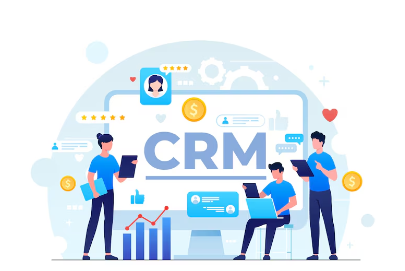
In today’s competitive digital marketplace, small businesses can no longer rely on spreadsheets, sticky notes, or scattered email threads to manage customer relationships. If you want consistent growth, predictable revenue, and better customer retention, implementing a Customer Relationship Management (CRM) system with effective lead tracking is no longer optional—it’s essential.
A well-implemented CRM system helps small businesses capture, organize, nurture, and convert leads efficiently. In this guide, we’ll explore how CRM lead tracking works, why it matters, and how it can directly boost your sales performance.
What Is CRM Lead Tracking?
CRM lead tracking is the process of capturing potential customer information and monitoring their journey from initial contact to final purchase. It allows businesses to:
- Store lead details in one centralized system
- Track interactions (calls, emails, website visits)
- Assign leads to sales team members
- Monitor follow-ups and deal progress
- Analyze conversion rates
Instead of losing opportunities due to missed follow-ups or poor organization, a CRM ensures that every lead is nurtured strategically.
Why Small Businesses Struggle Without a CRM
Many small businesses face common sales challenges:
- Leads get lost in emails
- Sales follow-ups are inconsistent
- No clear visibility of sales pipeline
- Poor communication between marketing and sales teams
- No data to analyze performance
Without a structured system, even high-quality leads fail to convert. That’s where CRM lead management becomes a game changer.
How CRM Lead Tracking Boosts Your Sales
1. Centralized Lead Management
A CRM stores all customer information in one place. This includes:
- Contact details
- Purchase history
- Inquiry source
- Communication records
- Notes and follow-up reminders
With centralized data, your team avoids duplication, confusion, and miscommunication. Everyone stays on the same page, improving efficiency and professionalism.
2. Faster Lead Response Time
Studies consistently show that the faster you respond to a lead, the higher your chances of converting them.
A CRM can:
- Send automated notifications for new inquiries
- Assign leads instantly to sales representatives
- Trigger automatic welcome emails
Quick responses build trust and demonstrate reliability—two crucial factors in closing sales.
3. Organized Sales Pipeline
A visual sales pipeline allows you to see exactly where each lead stands:
- New Lead
- Contacted
- Proposal Sent
- Negotiation
- Closed Won / Lost
This clarity helps small businesses forecast revenue, prioritize high-value opportunities, and identify bottlenecks in the sales process.
If many leads are stuck at the “proposal” stage, for example, you know where improvement is needed.
4. Automated Follow-Ups
One of the biggest reasons sales are lost is lack of follow-up. Customers are busy, and often they simply forget—not reject.
CRM systems allow you to:
- Schedule reminders
- Automate email follow-ups
- Set task notifications
- Create drip marketing campaigns
Automation ensures that no lead goes cold due to human error.
5. Better Customer Insights
A CRM provides valuable analytics such as:
- Lead conversion rates
- Sales cycle length
- Best-performing marketing channels
- Top sales representatives
- Customer behavior patterns
With data-driven insights, small businesses can refine their marketing strategies, improve sales techniques, and allocate budgets wisely.
6. Improved Team Collaboration
If your sales and marketing teams are not aligned, growth becomes difficult.
CRM systems improve collaboration by:
- Sharing real-time lead updates
- Tracking campaign performance
- Recording communication history
- Avoiding duplicate outreach
When teams work together with shared visibility, conversions increase significantly.
7. Personalized Customer Experience
Modern customers expect personalization. Generic messages rarely convert.
With CRM data, you can:
- Send personalized offers
- Address customers by name
- Recommend relevant products
- Tailor follow-ups based on past interactions
Personalization builds stronger relationships and increases customer loyalty.
Key Features to Look for in a CRM for Small Businesses
When selecting a CRM solution, small businesses should prioritize:
- Lead capture automation
- Contact management
- Sales pipeline tracking
- Email and SMS integration
- Reporting and analytics
- Mobile accessibility
- Integration with website and marketing tools
Choosing a scalable CRM ensures your system grows alongside your business.
Real Impact: How CRM Increases Revenue
Let’s break down how CRM directly affects your bottom line:
| CRM Benefit | Sales Impact |
|---|---|
| Faster responses | Higher lead conversion |
| Automated follow-ups | Reduced lost opportunities |
| Organized pipeline | Better forecasting |
| Data insights | Smarter decision-making |
| Personalization | Higher customer retention |
When these factors work together, businesses often see:
- Increased closing rates
- Shorter sales cycles
- Higher customer lifetime value
- Improved customer satisfaction
Lead Tracking + Digital Marketing = Maximum Growth
CRM lead tracking becomes even more powerful when integrated with digital marketing strategies such as:
- Search engine optimization (SEO)
- Social media marketing
- Paid advertising campaigns
- Email marketing
For example, if you know which campaign generated the most qualified leads, you can invest more in that channel. CRM analytics help you optimize marketing ROI effectively.
Common Myths About CRM for Small Businesses
“CRM is only for big companies.”
Not true. Many CRM solutions are affordable and designed specifically for small businesses.
“CRM systems are too complicated.”
Modern CRMs are user-friendly, cloud-based, and easy to implement.
“We don’t have enough leads to justify CRM.”
Even with fewer leads, proper tracking ensures maximum conversion. Every opportunity counts.
Steps to Successfully Implement CRM Lead Tracking
- Define your sales process
- Train your team properly
- Import and organize existing customer data
- Set up automation workflows
- Monitor performance regularly
- Optimize based on analytics
Implementation should focus on improving efficiency—not adding complexity.
Final Thoughts: Turn Leads into Loyal Customers
In a competitive marketplace, small businesses must work smarter—not harder. A CRM system with effective lead tracking ensures that every potential customer is nurtured properly, every opportunity is tracked, and every sales effort is measurable.
If you want to boost your sales, improve customer relationships, and scale sustainably, investing in CRM lead management is one of the smartest decisions you can make.
The businesses that grow consistently are not necessarily the ones with the most leads—but the ones that manage their leads best.